Say what you need
A cylinder, a meal, a leaking pipe.
Nigeria · Accra · Nairobi · Dar es Salaam · Kampala
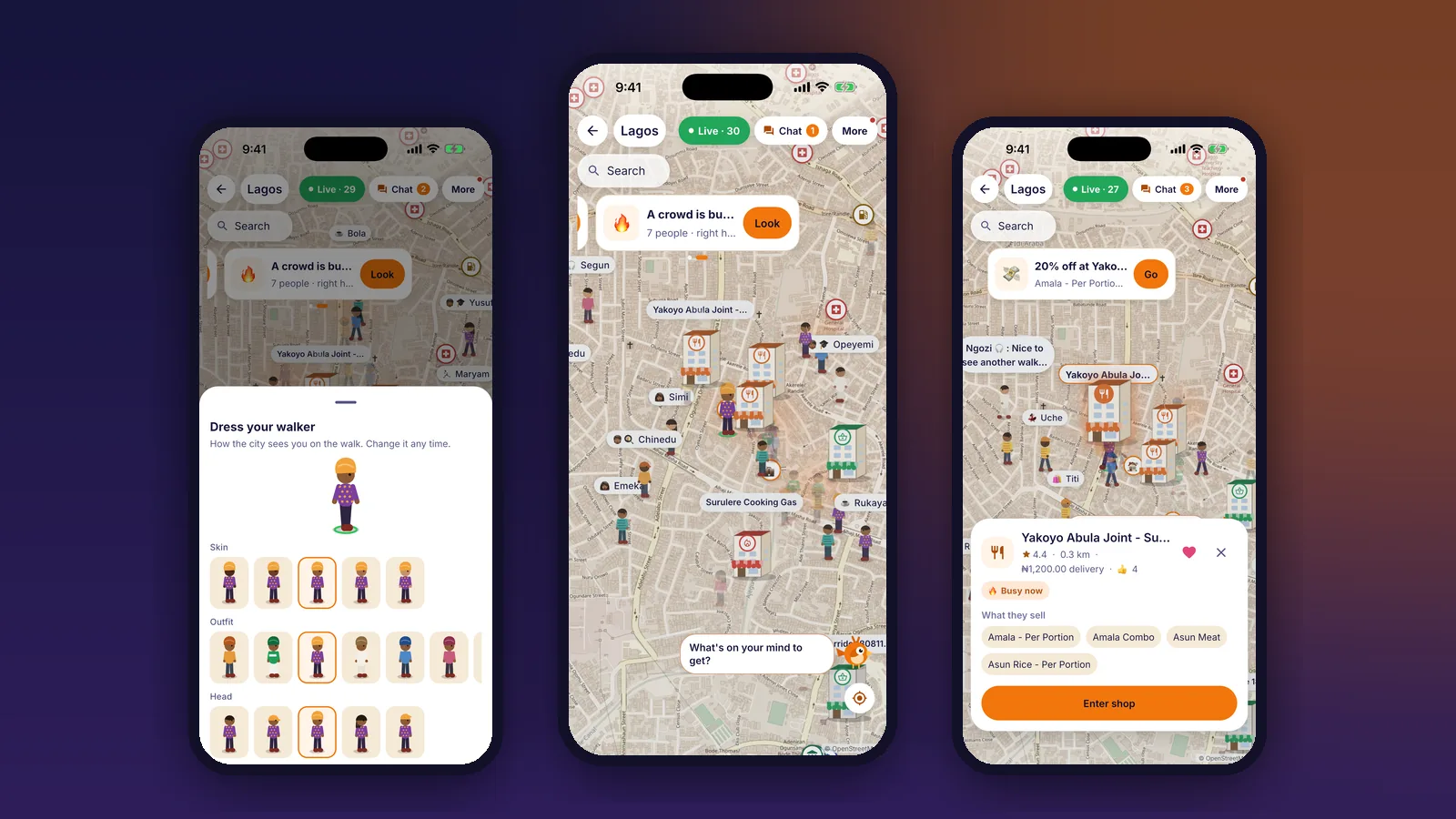
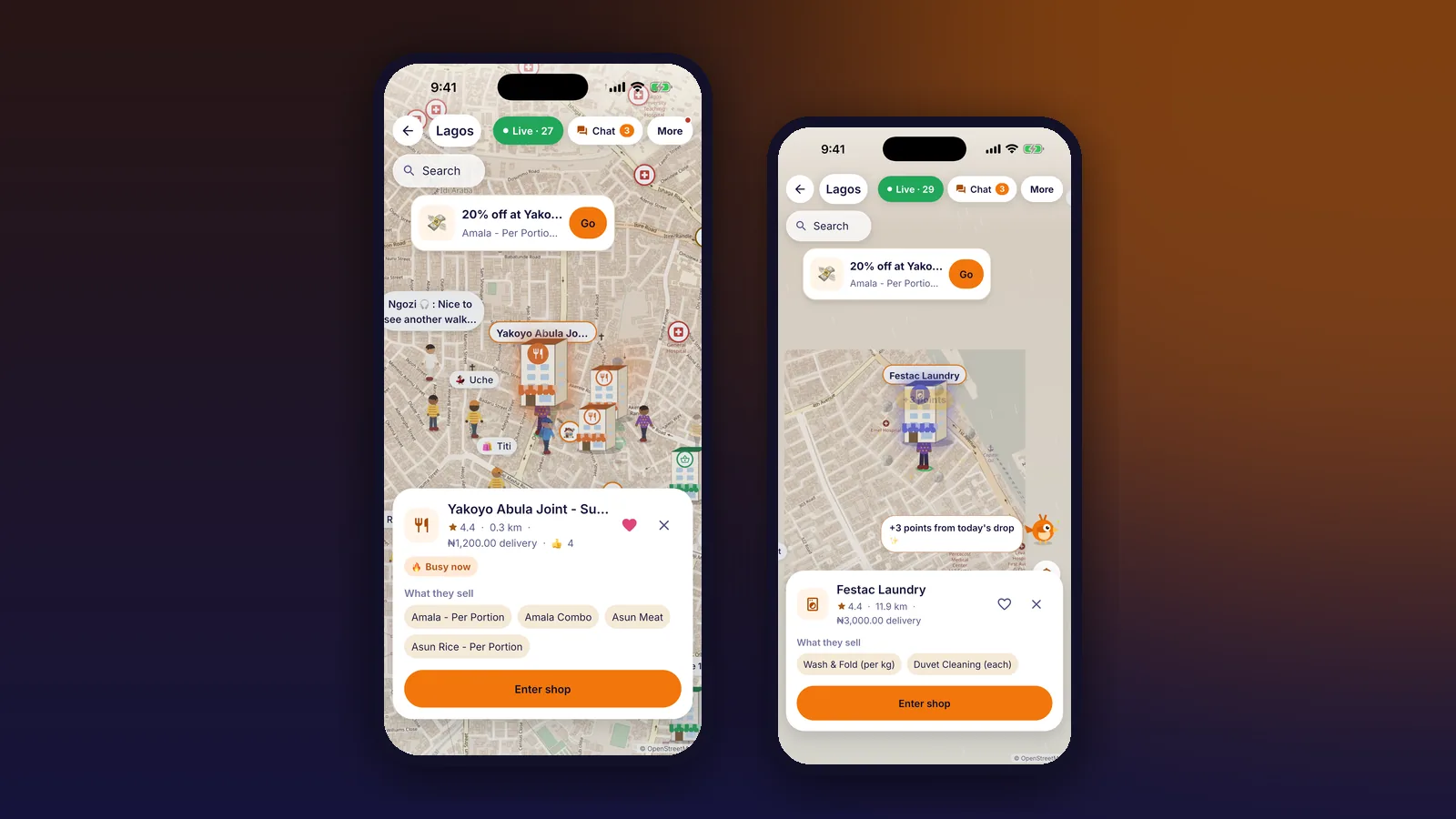
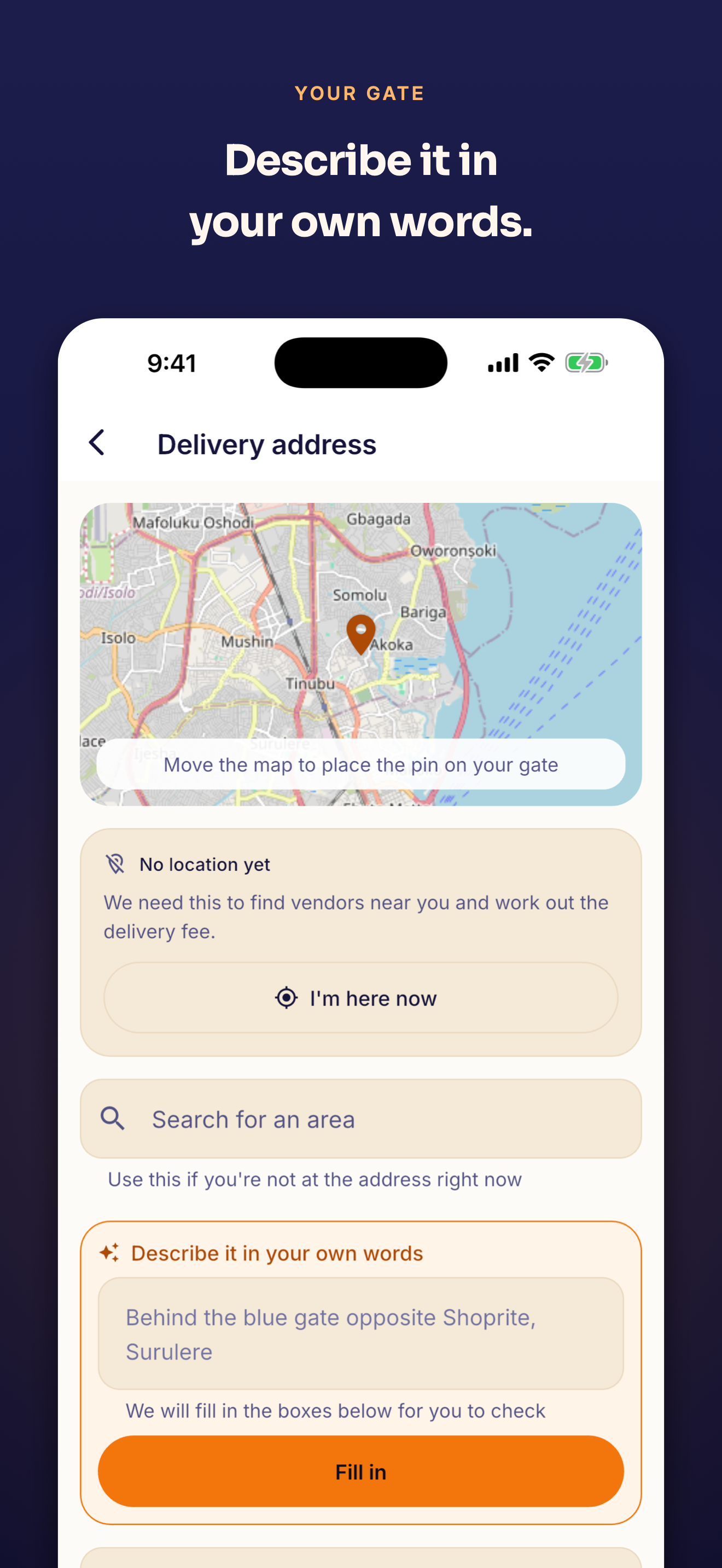
A map of your city with your neighbours on it — and everything it sells.
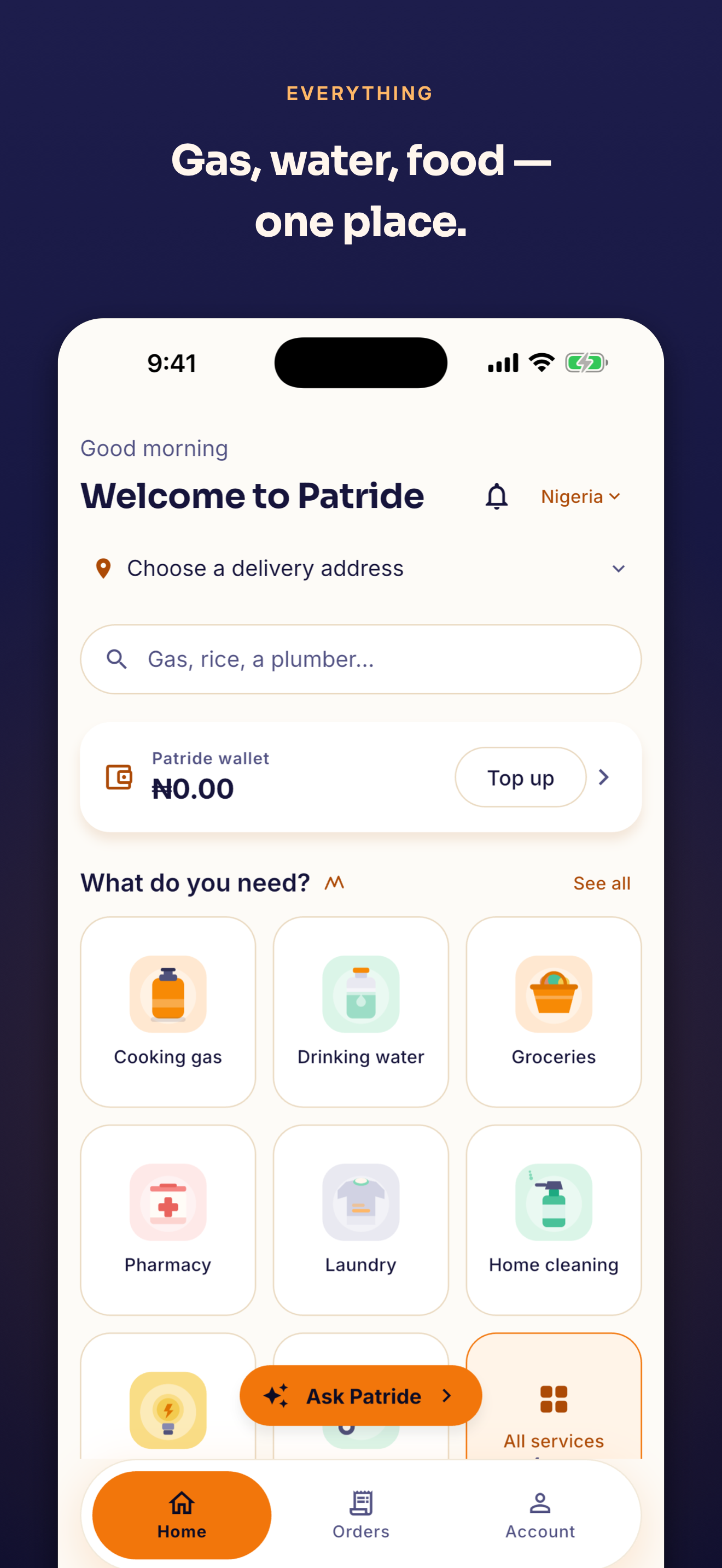
Gas, water, groceries, food, pharmacy, laundry and repairs — same app, same rider, one delivery fee.
More than delivery
Chat to order
No searching, no basket, no six taps to find the size you always buy. Type it the way you would say it to the shop on your street — “13kg refill and a crate of eggs” — and Patride works out who has it, what it costs today, and how soon it can reach your gate.
Order
Cooking gas first, because it runs out at the worst possible moment. Then water, groceries, food and the plumber who never picks up. One app, one rider, one delivery fee.
The rider
A delivery goes onto a board with what it pays already on the card. The rider reads the area and the money, and decides. Nothing is pushed onto anybody, and nobody finds out what a run was worth after riding it.
The handover
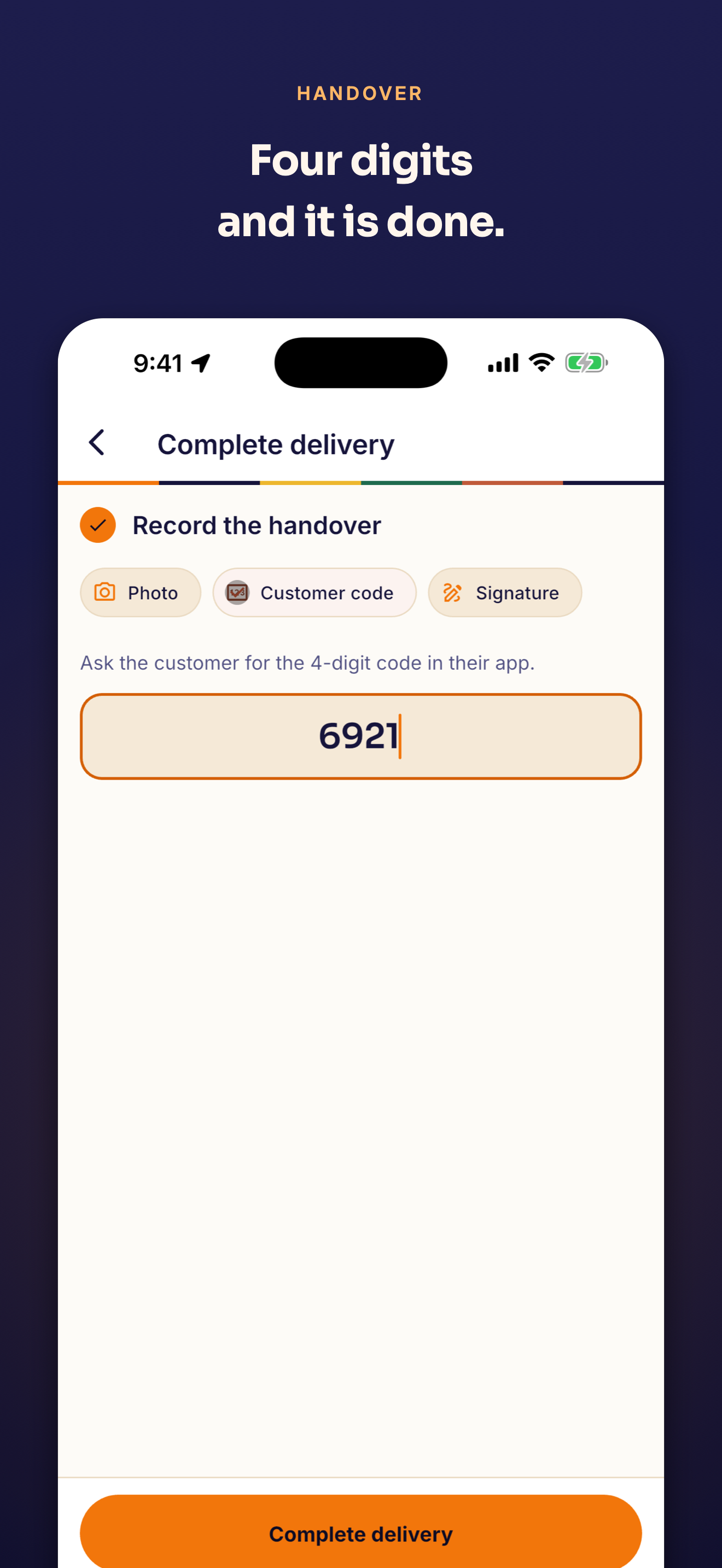
Your app shows four digits. The rider types them in at your gate, and the job cannot be closed without them — so “delivered” means somebody actually put it in your hands, not that a photograph was taken of a doorstep while you were out.
6921
A photograph and a signature do the same job where a code will not work — a delivery to a locked reception, a customer whose phone has died.
For shops
An order arrives, you accept it with one tap, and a rider comes for it. No listing fee, no monthly charge, and every naira you are owed is itemised by order.
A person reviews your shop before customers can see it — slower than a sign-up form, and the reason a customer trusts a name they have never heard of.
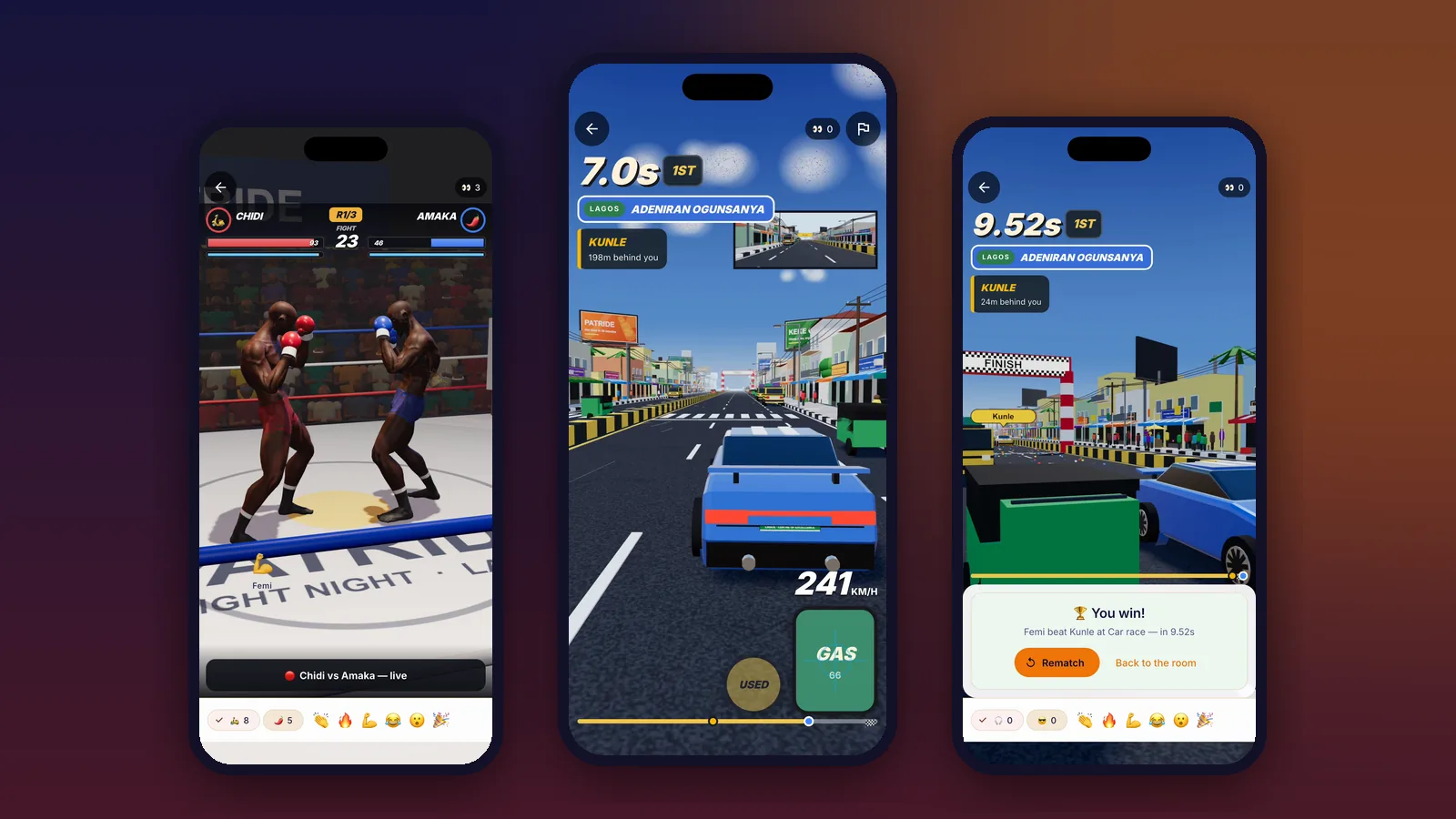
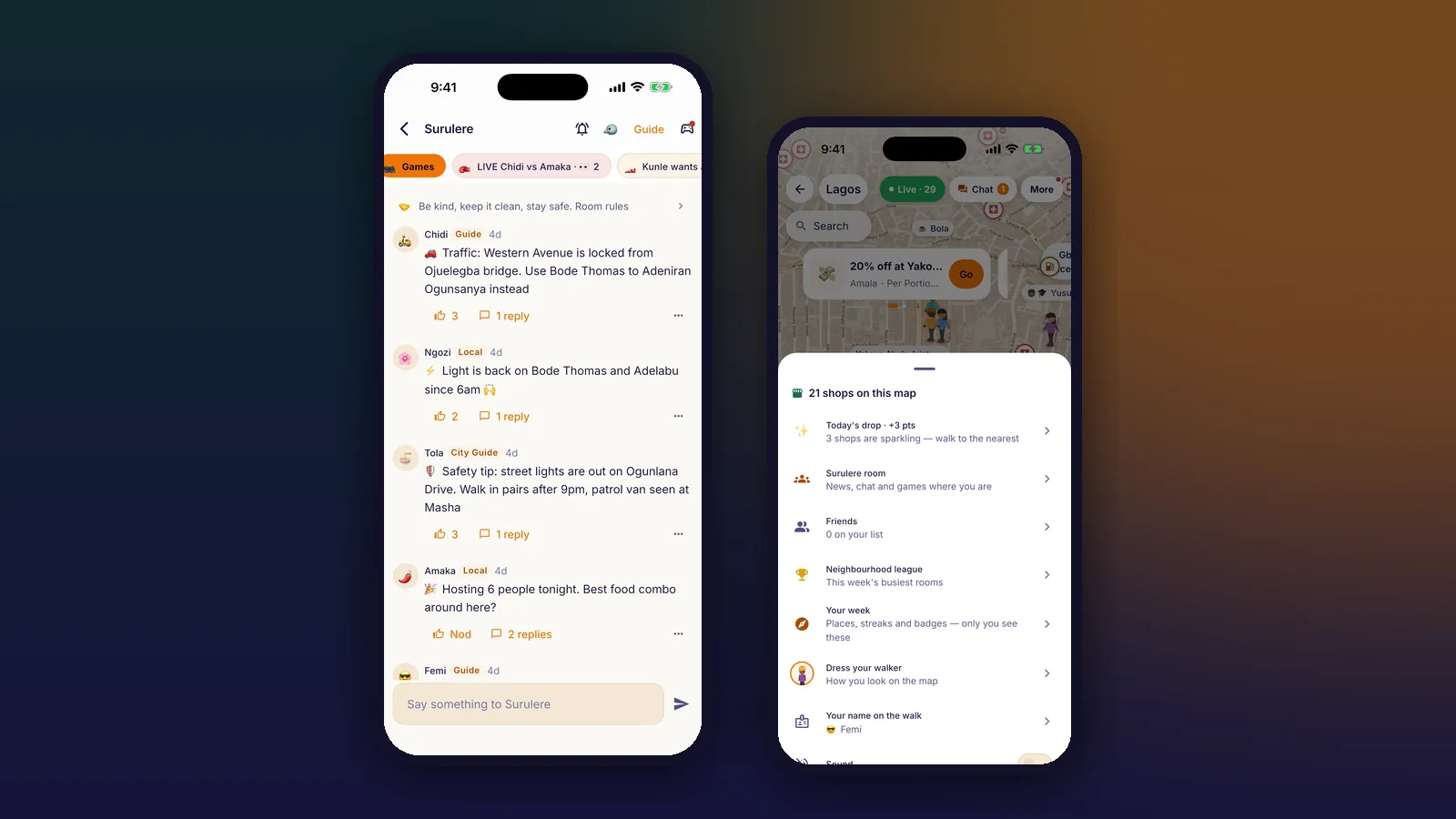
One app — from the gas and the groceries to the games.
A cylinder, a meal, a leaking pipe.
A shop on your street, a rider on your road. Price first.
Watch them come on the map.
Prices, payments and languages set for each market.